
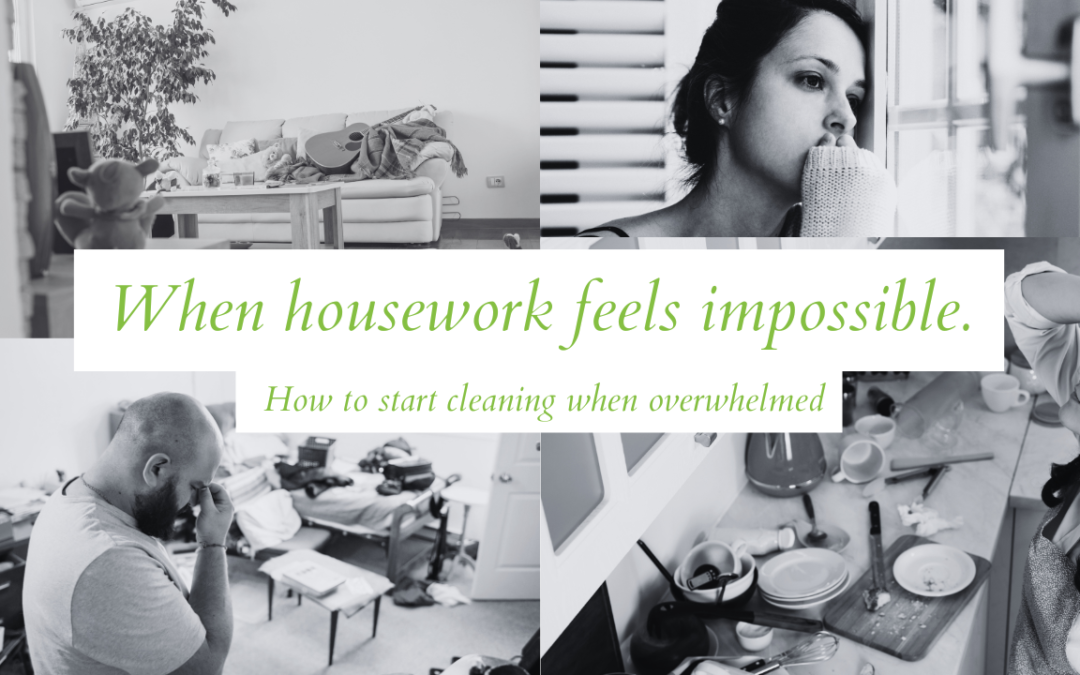
There are seasons in life where keeping up with housework feels manageable… and then there are seasons where you feel completely overwhelmed, and even loading the dishwasher can feel like climbing a mountain.
When your mental health is struggling, everyday tasks often become heavier. Anxiety, depression, burnout, grief, stress, ADHD, trauma and emotional overwhelm can all impact motivation, focus, energy and decision-making. Things that once felt automatic suddenly require enormous mental effort.
And unfortunately, mess can make that overwhelm feel even worse.
Research shows cluttered environments can increase stress levels and contribute to feelings of anxiety and mental fatigue. At the same time, struggling mentally can make it harder to maintain routines and complete tasks. It becomes a cycle that many people quietly live in.
The important thing to remember is this:
Struggling with housework is not a moral failure.
Your home is not a reflection of your worth, intelligence, capability or love for your family. Sometimes it simply reflects that you are carrying more than your brain or body can comfortably manage right now.

Why being overwhelmed can make cleaning feel impossible
One of the biggest mistakes people make when overwhelmed is believing they need to “catch up” all at once. They look at the entire house, panic, and freeze. The brain sees the workload as one enormous impossible task instead of a series of small achievable ones.
Mental exhaustion can also reduce executive functioning, which affects planning, prioritising and task completion. This is why many people feel stuck staring at mess without knowing where to begin.
That feeling is incredibly common, especially during periods of stress, parenting overwhelm, illness, burnout or emotional hardship.
Start smaller than you think you need to
That’s why starting tiny matters.
Not “deep clean the whole kitchen” tiny.
More like:
- Throw away rubbish for five minutes
- Put dishes near the sink
- Clear one bench
- Fold one basket of washing
- Open a window for fresh air
Progress creates momentum. Tiny completed tasks help signal safety and capability to an overwhelmed nervous system.
Even one small reset can help reduce visual stress and create a sense of calm in your environment.
Your home does not need to be perfect
It can also help to stop thinking of housework as “finishing” and start thinking of it as “resetting.”
Homes are lived in spaces. Especially with children, pets, work stress and busy schedules, there will always be another dish, another load of washing or another toy on the floor.
The goal is not perfection. The goal is creating a space that feels a little calmer and easier to function in.
You do not need:
- matching storage containers
- perfectly folded linen cupboards
- spotless floors 24/7
- a Pinterest-worthy home
Sometimes a successful day is simply having clean clothes, safe walkways and enough clear space to sit down and breathe.
Asking for help is okay
If you’re supporting children while struggling mentally, it’s also okay to adjust expectations temporarily. During hard seasons, survival and emotional safety matter more than immaculate homes.
And importantly, asking for help is not weakness.
That help might look like:
- a partner taking over certain tasks
- children helping in age-appropriate ways
- a friend sitting with you while you tackle one room
- using grocery delivery
- hiring a cleaner occasionally
- speaking to a GP or mental health professional
Support exists because humans were never designed to carry everything alone.
Mental health support services in Queensland
If your overwhelm has become constant, or daily tasks feel consistently impossible, it may help to reach out for professional mental health support.
In Queensland, support services include:
- Beyond Blue
- Lifeline Australia
- Queensland Health Mental Health Services
- headspace Australia for young people aged 12 to 25
- Kids Helpline for children and teens
- 13YARN for Aboriginal and Torres Strait Islander people seeking culturally safe support
Queensland Health also recommends speaking with your GP, who can help create a Mental Health Care Plan and connect you with psychologists or other services.
You do not need to “earn” support by reaching breaking point first.
One small step still counts
And if all you manage today is picking up one thing, opening one curtain or drinking one glass of water while the washing waits another day, that still counts as moving forward.
Small steps are still steps.
And you deserve support, care and compassion while taking them.
Visit our blog for more articles.
