
Affirmations for kids might sound simple, but they can have a powerful impact on how children see themselves and the world around them. At their core, affirmations are short, positive statements that help shape thoughts, build confidence, and encourage a healthier mindset over time. And they are not just for kids. Adults benefit from them just as much, we just tend to forget to use them when life gets busy.
Why affirmations matter for children
Children are constantly absorbing messages from the world around them. Over time, those messages become their inner voice. Affirmations help guide that voice in a positive direction. When kids repeat uplifting statements regularly, they begin to challenge negative thoughts and replace them with more supportive beliefs.
This can lead to stronger confidence, better emotional regulation, and resilience when things feel hard. A child who learns to say “I can try again” instead of “I can’t do this” is already building a mindset that will support them for life.
Affirmations for younger children
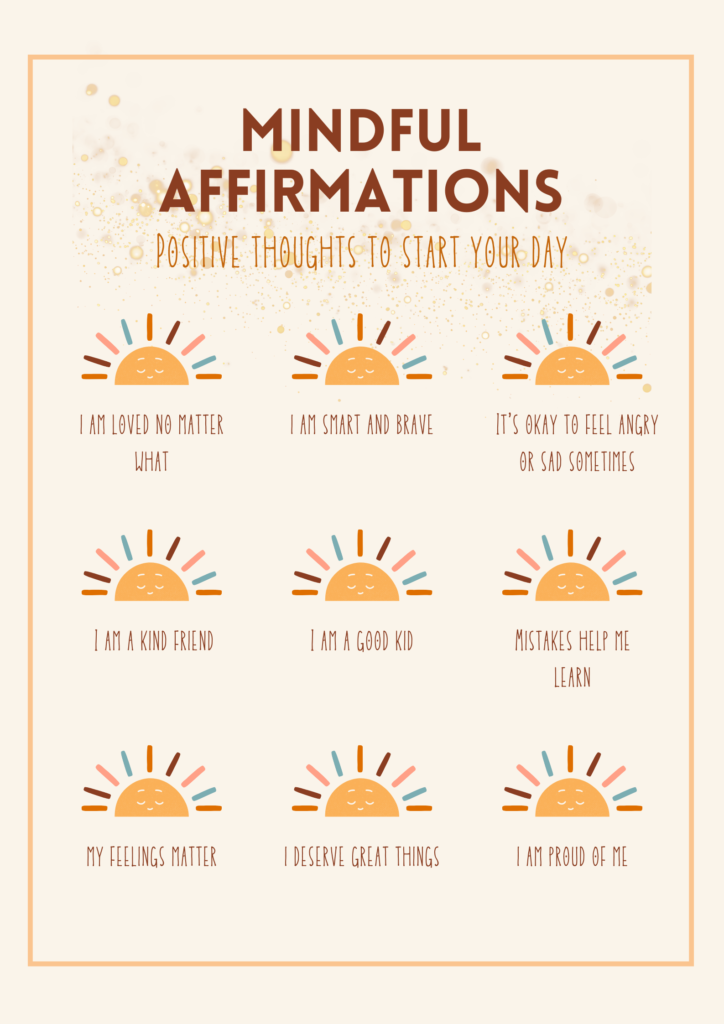
For younger kids, keep things simple, clear, and easy to remember. These affirmations should feel safe, comforting, and encouraging.
Examples:
“I am kind”
“I am brave”
“I am loved just as I am”
“I can try my best”
“I am safe”
“I am strong”
“I can learn new things”
“My feelings matter”
You can also introduce slightly more powerful language in a gentle way:
“I am important in this world”
“I have a bright light inside me”
“I make people smile just by being me”
The key is repetition and consistency. Say them during everyday moments like getting ready in the morning or winding down at night.
Affirmations for primary school kids
As kids grow, they start facing more challenges with school, friendships, and self-confidence. This is where affirmations can really help build resilience and a positive self-image.
Examples:
“I can handle hard things”
“I learn and grow every day”
“Mistakes help me get better”
“I am a good friend”
“I believe in myself”
“I can solve problems”
“I am proud of my effort”
“I keep going even when it’s hard”
More powerful affirmations to build inner strength:
“I am stronger than my worries”
“I am capable of amazing things”
“I trust myself to figure things out”
“I do not give up on myself”
“I am in charge of my choices”
Encourage kids at this age to choose their favourites or even create their own. When they connect with the words, they are far more likely to believe them.
Affirmations for teens and older kids
The teenage years can be filled with self-doubt, comparison, and big emotions. Affirmations during this stage can help anchor them in self-worth and confidence.
Examples:
“I am enough as I am”
“My voice matters”
“I deserve respect”
“I can grow through challenges”
“I choose to be kind to myself”
“I am allowed to take up space”
“I am proud of who I am becoming”
More powerful, deeper affirmations:
“I am not defined by my mistakes”
“I am worthy of love, respect, and success”
“I trust the path I am on”
“I have the strength to overcome anything I face”
“I honour who I am and who I am becoming”
“I am building a life I am proud of”
Teens might not jump on board straight away, and that is okay. The most effective approach is to model it yourself and keep it natural.
Affirmations are powerful for adults too
Affirmations are just as important for adults, especially when dealing with stress, overwhelm, and negative self-talk. The way we speak to ourselves shapes how we show up in our lives and for our families.
Simple but powerful examples:
“I am doing my best, and that is enough”
“I can handle what today brings”
“I am allowed to rest”
“I am worthy of good things”
“I trust myself”
Stronger mindset-shifting affirmations:
“I release what I cannot control”
“I am capable, resilient, and strong”
“I deserve a life that feels good to live”
“I am creating positive change in my life”
When kids hear adults speaking kindly about themselves, it reinforces those same habits in them.
Making affirmations part of everyday life
The magic of affirmations is in the repetition. They do not need to be perfect, just consistent. Try writing them on mirrors, popping them into lunchboxes, or saying them together in the car.
A really fun and surprisingly powerful way to introduce affirmations to kids (and honestly adults too) is through music, and the Affirmations track is a great example of this. It turns positive self-talk into something catchy, light-hearted, and easy to remember, which can be especially helpful for children who resist traditional “talking about feelings” moments. The rhythm and repetition help the affirmations stick without feeling like a lesson, and it can open the door to conversations about confidence and mindset in a really natural way. You can listen to it here.
You can even create little rituals around them, like a quick morning affirmation before school or a calming one before bed.
At the end of the day, affirmations help build a strong, supportive inner voice. And that voice is something your child will carry with them for life. When we give kids the tools to speak kindly to themselves, we are giving them something truly powerful.
Visit our blog for more.
